Red Bull is always remembered by its famous tagline ‘Red Bull gives you wings’. Red Bull marketing strategy is one of the best examples of how brand can build demand without making the product the center of every advertising campaign. They were not famous by selling only energy drink. They sell energy, risk, speed, performance, youth culture, sports, gaming, music, and lifestyle. Many beverage brands depend on normal advertising but Red Bull grows its brand around world of gaming, athletes, music, events, media ownership and Formula 1.
In this Red Bull case study, we break down this brand from 360 degree angle. We cover:
- Red Bull Company Overview
- Who Is Red Bull’s Main Target Audience?
- Red Bull Business Model Explained
- Red Bull Marketing Mix (4Ps Analysis)
- Red Bull Marketing Strategy (Complete Breakdown)
- Red Bull Stratos Campaign
- SWOT Analysis of Red Bull
This Red Bull case study shows why this brand is so difficult to beat and what any business can learn from it.
Red Bull Company Overview
Origin Story of Red Bull
Story of Red Bull starts in 1982 when an Austrian businessman named Dietrich Mateschitz came to Thailand on business trip. When he was exhausted from jet lag, he tried local tonic drink called Krating Daeng which was created by Thai businessman Chaleo Yoovidhya. The drink worked for him, and he recognized its potential instantly.
Mateschitz partnered with Yoovidhya, altered the formula for Western tastes, and co founded Red Bull GmbH in 1984. The product was launched in market in Austria in 1987 and targeting very specific type of consumer.
From the very beginning, Red Bull was not positioned as drink. It was positioned as performance tool for people who want to do more and push personal limits. This foundational decision shaped everything that followed.
Brand mission and ‘Gives You Wings’ positioning
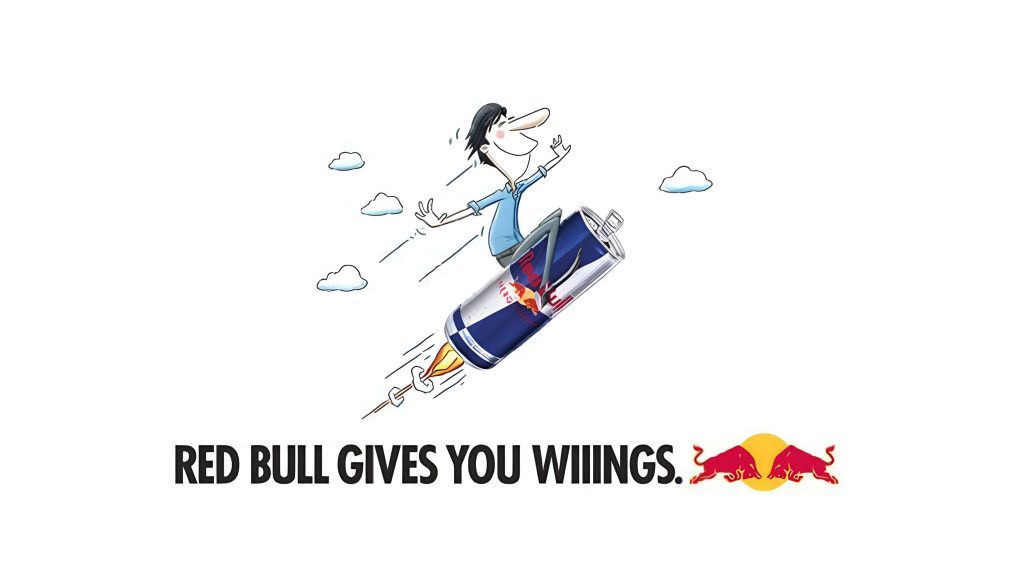
Red Bull’s famous tagline is ‘Gives You Wings’. This tagline has become one of the most recognizable in beverage industry. This slogan works because it fits on every audience segmentation. This is the main Red Bull marketing strategy. They are not limited to caffeine. Red Bull creates bigger emotional idea around energy.
For example:
- If student is studying for late night.
- Car driver needs energy for long drive trip.
- Also for athletes before training.
- And also Formula 1 team chasing performance and extreme sports athlete jumping from cliff.
Red Bull’s brand mission can be understood as giving energy to people and ideas. This is why the brand supports athletes, creators, dancers, musicians, gamers, and sports communities. The brand wants to be present where people are pushing limits.
Important Facts About Red Bull
| Company Name | Red Bull GmbH |
| Founded | 1984 |
| First Market Launch | 1987 |
| Founders | Dietrich Mateschitz and Chaleo Yoovidhya |
| Brand Slogan | Gives You Wings |
| Main Product Category | Energy Drinks |
| 2025 Cans Sold | 13.969 billion cans worldwide |
| 2025 Turnover | €12.196 billion |
| Brand Value 2025 | €8.7 billion according to Brand Finance |
Who Is Red Bull’s Main Target Audience?
Red Bull primarily targets young audience, aged 16 to 35, who are energetic and performance oriented. Red Bull target audience is not limited to one age group. It mainly targets young, energetic, ambitious, and experience seeking consumers. The audience includes:
- College students who need energy to study late and need focus during exams.
- Young professionals who work for long hours and want quick energy.
- Athletes who connect with performance, training, and competition.
- Gamers who spend long hours in gaming sessions.
- Drivers who need alertness during long drives.
- Nightlife audiences who consume energy drinks during parties.
- Adventure sports fans who follow extreme sports, mountain biking, surfing, skating, and motorsports.
- Music and festival audiences who connect with live experiences.
- People who need quick energy during work, travel, events, and study.
Red Bull target audience is powerful because brand connects with real situations. It is not only selling drink for thirst. It is selling energy for moments when people want to stay active.
Red Bull Audience Segmentation
| Segment | Audience Type | Why Red Bull Appeals to Them |
| Demographic | Teenagers, college students, young adults and working professionals | They want energy, performance, and lifestyle identity they are proud of |
| Psychographic | Risk takers, sports fans, and creators | Red Bull matches their active mindset and personal values |
| Behavioral | Consumers who use energy drinks before sport, study, gaming, travel, late night work | The product fits naturally into high energy moments |
| Geographic | Global urban and semi urban markets | Strong global availability and instant brand recall |
Why Red Bull does not market like normal beverage brand?
Red Bull does not market like other beverage brands because it does not make drink as hero of its advertising campaigns. They mainly focus on consumer lifestyle. Other beverage brands show person drinking the product and feeling refreshed. But Red Bull shows high energy situations. That Red Bull advertising strategy works because it makes brand more memorable. Red Bull does not chase attention only through discounts and celebrity ads. It creates moments that people want to watch, attend, share, and discuss.
Red Bull Business Model Explained
Red Bull business model is based on selling energy drinks, building premium brand value, owning attention through media and events and creating strong global distribution. The company does not only earn money from selling energy drinks. But its marketing strategies make its product more valuable. In this Red Bull case study, let’s discuss business model of Red Bull.
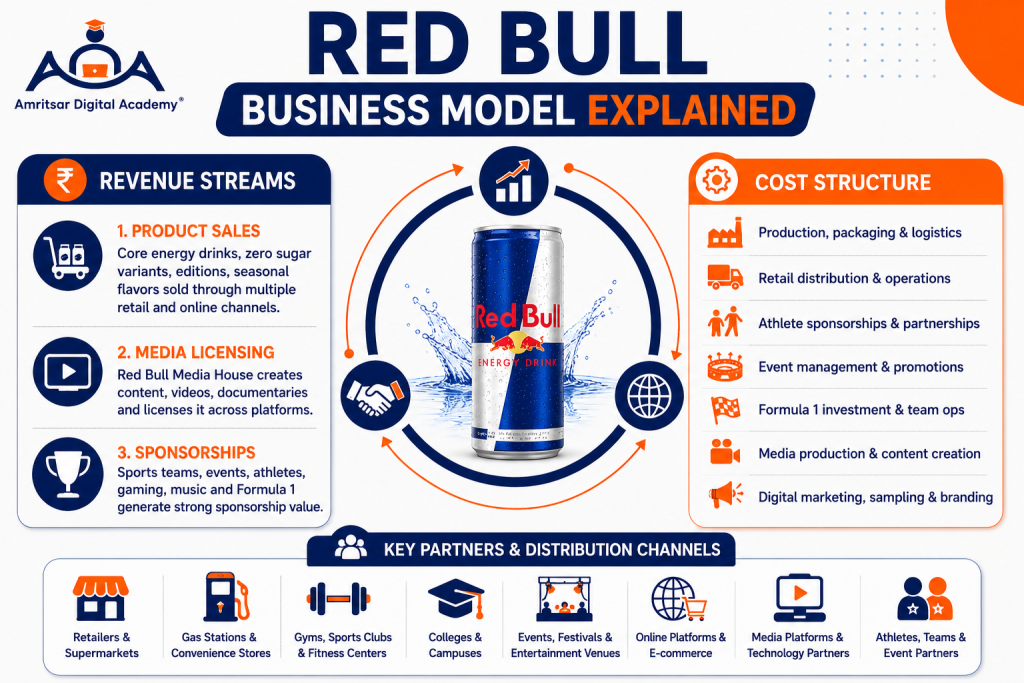
Revenue Streams
- Product sales: The main source of income for Red Bull is product sales. Red Bull sells its main energy drink, zero sugar variants, seasonal flavours and Red Bull editions to generate revenue. Their income comes from supermarkets, convenience stores, gas stations, online grocery platforms, gyms, colleges, vending machines, events, bars, clubs, and retail partners.
- Media licensing: Another important part of Red Bull business model is media and intellectual property value. Content produced by Red Bull Media House is licensed and distributed across platforms. Red Bull Media House creates content, videos, event coverage, documentaries, athlete stories, and digital assets. This gives Red Bull more control over attention.
- Sponsorships: Red Bull also earns huge sponsorship value from sports properties and events. Its Formula 1 team, football involvement, extreme sports events, athlete partnerships, gaming events, and music events give brand high visibility.
Cost Structure
Red Bull business model carries very huge cost structure as compared to other beverages brands. Its cost structure includes production, packaging, logistics, retail distribution, athlete sponsorships, event management, sports team operations, Formula 1 investment, media production, digital marketing, sampling, and brand partnerships. Most of the huge amount is spent on marketing part. But that does not mean they spent on traditional ads. They spent large amount on building brand assets.
For example:
- Red Bull event marketing requires planning, venue setup, athlete coordination, safety systems, media coverage, and promotion.
- Formula 1 requires large amount of investment in technology, talent, engineering, travel, operations, and partnerships.
- Red Bull Media House also needs production teams, editors, photographers, videographers, media partners, content platforms, and distribution systems.
All these marketing efforts require huge cost to create long term brand value. Normal ads can run for few weeks. But Red Bull event marketing can be reused on different platforms such as Instagram, YouTube, Red Bull TV, and news articles for many years.
Key Partners and Distribution Channels
Red Bull’s distribution is strong because product is placed where energy is needed. Their key partners include retailers, distributors, supermarkets, convenience stores, petrol pumps, gyms, clubs, bars, event organizers, athletes, sports teams, media platforms, technology partners, and local marketing teams.
This answers the question: How does Red Bull promote their product? It promotes product by placing it at the right moment, not only by running ads.
Red Bull by Numbers (2025-2026)
Red Bull numbers shows how strong company remains in (2025-2026). This data is given in the official Red Bull company profile:
| Metric | 2025-2026 |
| Cans sold annually | 13.969 billion |
| Net revenue | €12.196 billion |
| Global market share | 43% |
| Countries of operation | 178 |
| Athletes supported | 600+ |
| Sport disciplines covered | 500+ |
These numbers prove that Red Bull marketing strategy is not only creative. It is commercially strong.
Red Bull Marketing Mix (4Ps Analysis)
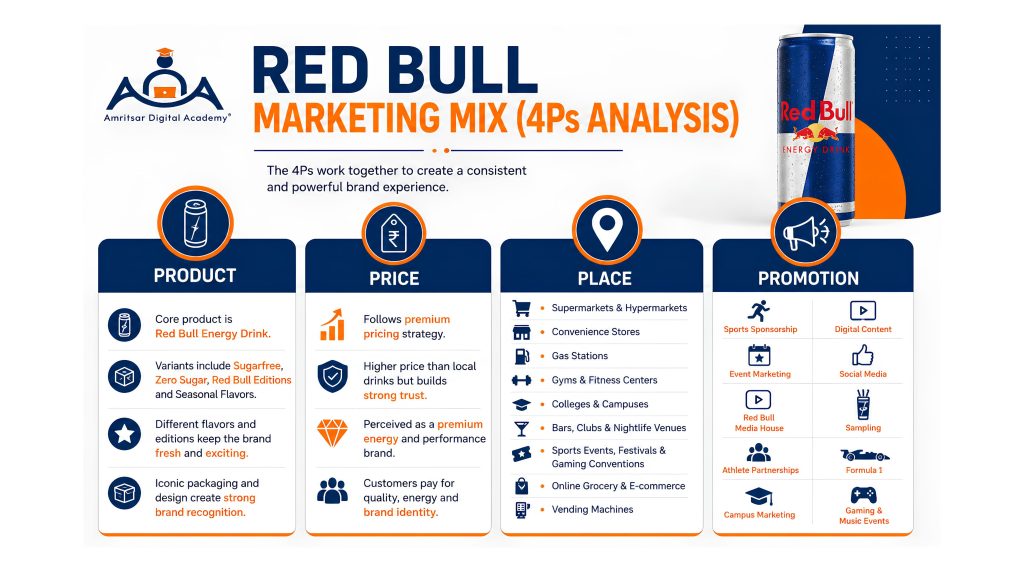
Red Bull marketing mix shows how they manage their product, price, place, and promotion. All these four areas work together to create consistent brand experience.
Product
The main product of Red Bull is its energy drink. The original Red Bull energy drink is main product that creates brand identity. The company added additions to its product portfolio such as Red Bull edition, zero sugar drink, and seasonal flavours. Red Bull’s product strategy is simple but it is highly effective.
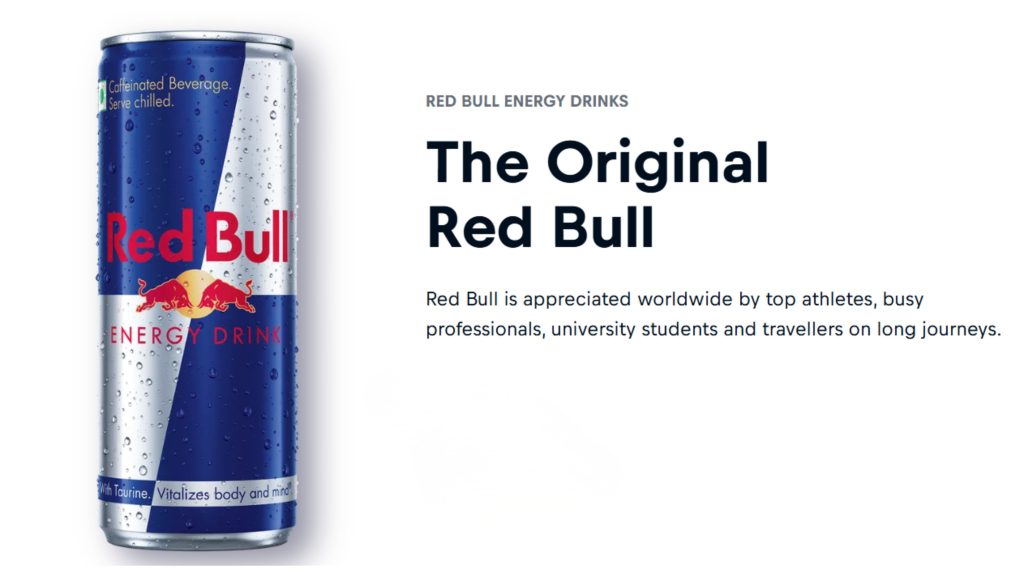
They attract people who want sugar free products with its zero sugar drink. Red Bull editions helps brand to stay fresh with different flavours and seasonal choices. Its packaging is its main symbol of product recognition.
Price
Red Bull follows premium pricing strategy. Their prices are generally higher than those of other local drinks. But still people prefer Red Bull because it has built trust and clear identity. Its premium pricing strategy works because Red Bull is not soft drink brand, it has strong identity as energy drink.
Place
Red Bull’s distribution reach is one of its most important competitive advantages. The brand is available wherever its target audience spends time:
- Supermarkets and hypermarkets
- Convenience stores and gas stations
- Gyms, fitness centers, and sports clubs
- Colleges, universities, and campuses
- Bars, clubs, and nightlife venues
- Sports events, music festivals, and gaming conventions
- Online grocery platforms and e-commerce
- Vending machines
Promotion
The main pillar of Red Bull marketing strategy is its promotion. Red Bull promotes through sports sponsorship, Red Bull event marketing, Red Bull Media House, athlete partnerships, digital content, social media, sampling, campus marketing, Formula 1, gaming, and music events. Red Bull advertising works because it feels more entertaining and less promotional.
Red Bull Marketing Strategy (Complete Breakdown)
Red Bull marketing strategy is created based on one big clear goal i.e Red Bull gives you energy. Its whole marketing strategy revolves around this idea. In this Red Bull case, lets understand what marketing strategies Red Bull used.
1. Lifestyle Marketing Strategy
Red Bull is not only selling caffeine. It sells lifestyle that is built around action, performance and energy. Its lifestyle marketing strategy connects audience with their lifestyles. The lifestyle strategy works because it connects product with identity. People do not only buy Red Bull because they are thirsty. They buy it because it fits moment, mood, and personality.
Red Bull shows product in their marketing strategy but center of the stage is connecting with lifestyle of audience. This lifestyle appears in extreme sports content, Formula 1 racing, skateboarding events, mountain biking, music festivals, and athlete stories.
2. Content Marketing Strategy
Red Bull content marketing strategy is its one the main reason of success. They create content that people want to watch even if they are not planning to buy energy drink. This strategy works because people do not like to watch promotion content all the time. Red Bull content strategy target those audience who like to watch mountain biking video, Formula 1 story, athlete interview, and gaming clip than direct product advertisements. Red Bull content marketing strategy build memory in mind of audience when they watch content and when they later see product, brand looks familiar to them. That influences the purchase decision of consumer.
3. Red Bull Media House Strategy

Red Bull Media House is dedicated media production and distribution company which is fully owned by Red Bull. It is one of the most important pillars of entire Red Bull marketing strategy. Red Bull Media House produces original films, television shows, digital series, event broadcast packages, print magazines, and music releases. It also makes strong Red Bull content marketing strategy across different platforms.
4. Red Bull Event Marketing

Red Bull event marketing creates real life experience that relates with audience so they remember and share. Red Bull try different strategy as compared to other brands normal ads. They know normal ads disappear after some time but strong events stay in mind of audience for many years. This is why Red Bull event marketing is more powerful than basic promotion. It gives audience something to feel, not only something to see. Famous events by Red Bull are:
- Red Bull Stratos
- Red Bull Air Race
- Red Bull Cliff Diving
- Red Bull Rampage
- Red Bull Soapbox Race
- Red Bull Dance Your Style
- Red Bull gaming events
- Red Bull music and culture events.
5. Formula 1 Marketing Strategy
Formula 1 is one of the most important parts of Red Bull marketing strategy. Formula 1 is not short campaign. It is full season storytelling platform. Every race weekend creates content. There are practice sessions, qualifying rounds, race moments, driver interviews, team updates, fan reactions, strategy decisions, BTS stories, and social conversations.
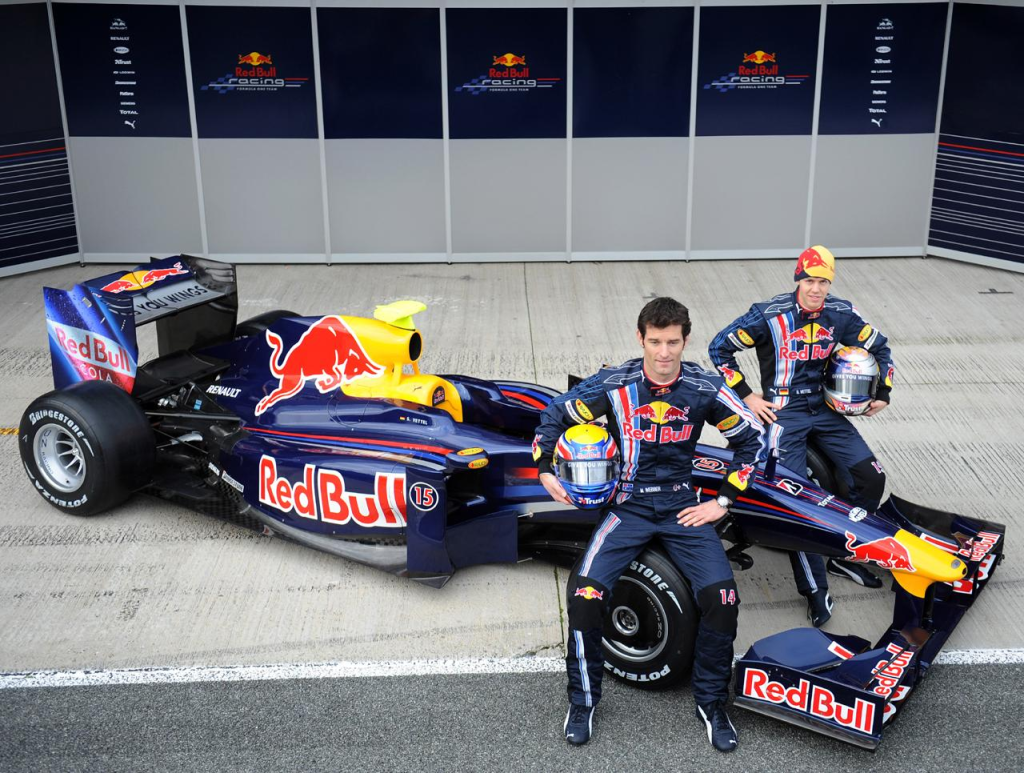
Formula 1 angle is especially important because Oracle extended its title partnership with Oracle Red Bull Racing. Oracle Cloud Infrastructure and Oracle AI are being used in race simulations, hybrid power unit development, fan engagement, and an AI powered strategy agent.
This connects Red Bull with speed, data, technology, engineering, and performance. It also gives the brand premium visibility in front of global audience.
6. Digital Marketing Strategy of Red Bull
Red Bull spent 30% of its total annual revenue on marketing efforts. Their digital marketing strategies help brand stay active every day without feeling repetitive. They strategically use action keywords on their website such as ‘Formula 1 live updates’ and ‘MTB stunts’. Red Bull digital marketing campaigns are created around entertainment first and product promotion second.
7. Social Media Marketing Strategy
Red Bull uses social media marketing to distribute its larger brand world. One event can become multiple reels, short videos, images, stories, posts, and articles. This supports Red Bull advertising strategy because audience does not always feel like they are watching an ad. They feel like they are watching something exciting.
| YouTube | They shows long-form documentaries, event films, athlete profiles |
| TikTok | It shows high energy and shareable clips |
| Action clips, athlete visuals, event highlights, short reels | |
| Twitch and Discord | Live esports tournament sponsorships and gaming community engagement. |
| Sports updates and live race commentary |
8. Influencer and Athlete Partnerships
Red Bull never pays influencers to promote their product. They collaborate with influencers and creators who live with brand for long term partnerships.
| Global Athlete Roster | Red Bull supports hundreds of athletes worldwide across sports like Formula 1, football, skateboarding, surfing, and snowboarding. These athletes act as brand ambassadors who are showing Red Bull’s adventurous and high energy lifestyle. |
| Athlete Support System | Provides training facilities, coaching, nutrition, and medical support. Helps athletes push limits and achieve record breaking performances. |
| GoPro Partnership | Red Bull teamed up with GoPro to capture extreme sports from the athlete’s point of view. |
| Esports and Gaming Creators | Red Bull connects with Gen Z and digital native audiences who see Red Bull as part of gaming culture. |
Red Bull Stratos Campaign
Red Bull Stratos campaign is masterclass in branded content marketing. It is combination of science, extreme sports and storytelling. It showed how brand can create global moment without making normal product advertisements.
What was Red Bull Stratos?
Red Bull Stratos campaign is not traditional advertisement. In 2012, Baumgartner jumped from the stratosphere in mission watched by millions of people around the world. The project combined science, risk, courage, performance, technology, and live media. It was not like normal stunt. It was carefully planned event with global attention.
Why Red Bull Stratos was marketing masterstroke
Red Bull Stratos was marketing masterstroke because it matched brand promise perfectly. Red Bull says ‘Gives You Wings,’ and Stratos project made that idea feel real.
People watched because this event was exciting, risky, and emotional. Media platforms covered it. Social media users discussed it. Fans shared clips. And campaign created huge earned media.
This is why Red Bull Stratos campaign is still discussed in marketing classrooms, brand case studies, and content marketing discussions.
SWOT Analysis of Red Bull
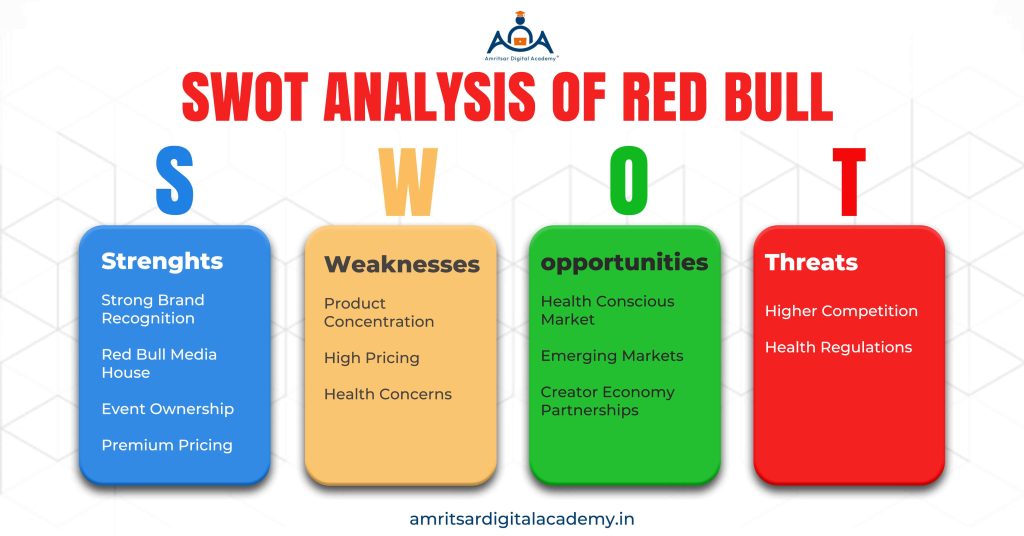
SWOT analysis of Red Bull shows why brand is strong and where they face challenges.
S = STRENGTHS
W = WEAKNESSES
O = OPPORTUNITIES
T = THREATS
STRENGTHS
- Strong brand recognition: Red Bull has strong brand recognition. People can recognize it with its logo, can and tagline. It operates in 175+ countries and is considered as industry leader in energy drinks.
- Red Bull Media House: It has strong media ownership through Red Bull Media House. Red Bull has storytelling advantage that no traditional beverage brand can easily replicate.
- Event Ownership: Red Bull event marketing is its major strength. Events help brand create real memories instead of only paid impressions.
- Premium Pricing: Red Bull has also premium pricing power. Customers are willing to pay more because brand has trust and status.
WEAKNESSES
- Product concentration: Red Bull sells only energy drink category. So product concentration is also risk for them. Consumers can shift their taste towards healthy beverage that impact huge on revenue.
- High Pricing: Red Bull follows premium pricing model. For price sensitive market, consumers choose cheaper alternatives as compared to Red Bull.
- Health Concerns: Most of the people are now becoming health conscious. Red Bull contains high amount of sugar and caffeine so people prefer healthier drinks rather than Red Bull.
OPPORTUNITIES
- Health conscious market: More consumers are choosing healthier drinks. No sugar drinks are higher growth opportunity for Red Bull.
- Emerging markets: These markets offer growth potential because young consumers in many countries are adopting energy drinks and global lifestyle brands.
- Creator economy partnerships: Working closely with digital content creators who reach niche active communities. It can extend brand reach efficiently and authentically.
THREATS
- Higher Competition: Competition in energy drinks are growing. Many other brands such as Monster Energy, Celsius, Rockstar, Prime Hydration, Ghost, Hell and dozens of strong local brands are competing aggressively for market share.
- Health Regulations: Many countries actively focus on health regulations and restrictions on energy drink sales to minors. This can affect demographic audience segmentation of Red Bull.
Final Verdict
Red Bull remains market leader because it built more than energy drink brand. Red Bull marketing strategy proves that strong positioning, owned media, real world experiences, and community led branding can make simple product feel much bigger than its category. For marketers, this Red Bull case study gives clear lesson. Strong brand is not created only by talking about product features. It is built by creating meaning around product.
The biggest lesson we can learn from this Red Bull case study is when your brand owns strong idea, every campaign becomes easier to connect, scale, and remember.
This case study was produced for educational purposes by Amritsar Digital Academy. For more case studies on brand strategy, digital marketing, and business models, visit amritsardigitalacademy.in/case-studies.