Quick Snapshot about Nike
| Detail | Information |
| Founded | 1964 as Blue Ribbon Sports |
| Founders | Phil Knight and Bill Bowerman |
| Renamed Nike | 1971 as Nike |
| Revenue | $46.3 billion (Reports Fiscal 2025) |
| Brand Value | $29.4 billion (Statista) |
| Tagline | Just Do It from 1988 to present |
| Core Strategy | Sell identity not products |
The Nike case study shows gap between what Nike sells and how it markets itself is entire lesson. Nike built world’s most recognised brand with its smart strategies not by luck. If you are student, marketer, or entrepreneur who wants to know what separates big brands from average one so this is the right place.
Nike spends roughly 8.4% of its total revenue every year on marketing. Most brands at that scale rely on product features to justify their prices. Nike barely mentions the shoe. That difference is what makes this Nike case study worth studying in 2026 when the tactics have updated but core strategy remains unchanged.
Nike Founding Story: Company Overview
Phil Knight and Bill Bowerman started company named Blue Ribbon Sports as distributors of Japanese running shoes in 1964. He sold imported Onitsuka Tiger shoes from the boot of his car at track meets across Oregon because they had no warehouse. In 1971, company changed their name to ‘Nike’ inspired by the Greek goddess of victory.
There are three major things from Nike early days that explain how brand thinks today.
- Bill Bowerman and waffle iron story: Bowerman was fascinated about lighter and better performing shoes. One morning, he poured rubber into his wife’s waffle iron to test new sole pattern. That experiment creates waffle sole which becomes one of the best shoe designs in history.
- $35 Swoosh Logo: Carolyn Davidson, graphic design student who designed the Nike Swoosh logo in 1971 for $35. When Nike brandbecamee popular, Phil Knight gave her Nike stock which is eventually became worth over $1 million. Now the logo appears on $46 billion worth of products costs is less than pair of Nike shoes.
- Signing Michael Jordan: In 1984, Nike played gamble in their marketing campaign, ‘The NBA can’t stop you from wearing them’. That means Nike signed rookie Michael Jordan to five year with $2.5 million. His first shoe, Air Jordan I, featured black and red colors that violated the NBA’s uniform rules.
NBA fined Michael $5000 every time he wore them. Instead of pulling the product, Nike paid $5,000 per game fine and used the controversy as free press. This marketing trick worked and Nike sold $70 million worth of Air Jordans, and by the end of 1985, revenues topped $100 million.
Nike Milestones Timeline
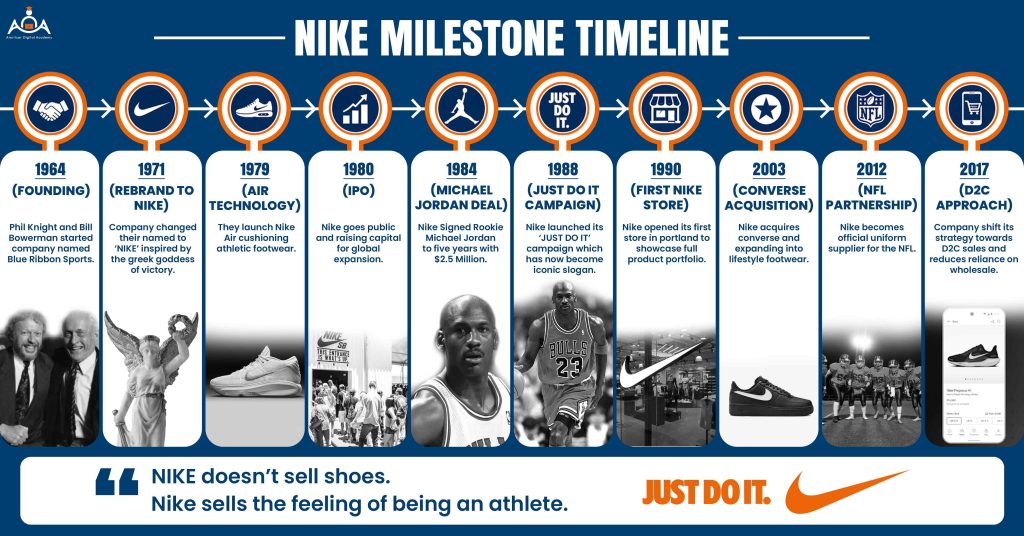
This Nike case study briefly shows the Nike milestones timeline based on the historical and strategic events.
| Year | Milestone |
| 1964 (Founding) | Phil Knight and Bill Bowerman started company named Blue Ribbon Sports. |
| 1971 (Rebrand to Nike) | Company changed their named to ‘Nike’ inspired by the Greek goddess of victory. |
| 1979 (Air technology) | They launch Nike Air cushioning athletic footwear. |
| 1980 (IPO) | Nike goes public and raising capital for global expansion. |
| 1984 (Michael Jordan Deal) | Nike signed rookie Michael Jordan to five year with $2.5 million |
| 1988 (Just Do It Campaign) | Nike launched its ‘Just Do It’ campaign which has now become iconic slogan. |
| 1990 (First Nike Store) | Nike opened its first store in Portland to showcase its full product portfolio. |
| 2003 (Converse Acquisition) | Nike acquires Converse and expands into lifestyle footwear. |
| 2012 (NFL Partnership) | Nike becomes official uniform supplier for the NFL. |
| 2017 (D2C Approach) | Company shifts its strategy towards D2C sales and reduces reliance on wholesale. |
Where Nike’s Money Comes From?
Nike Revenue Contribution
| Product Sales | 70% |
| Subscriptions | 10% |
| Brand Licensing and Collaborations | 15% |
| Advertising Revenue | 5% |
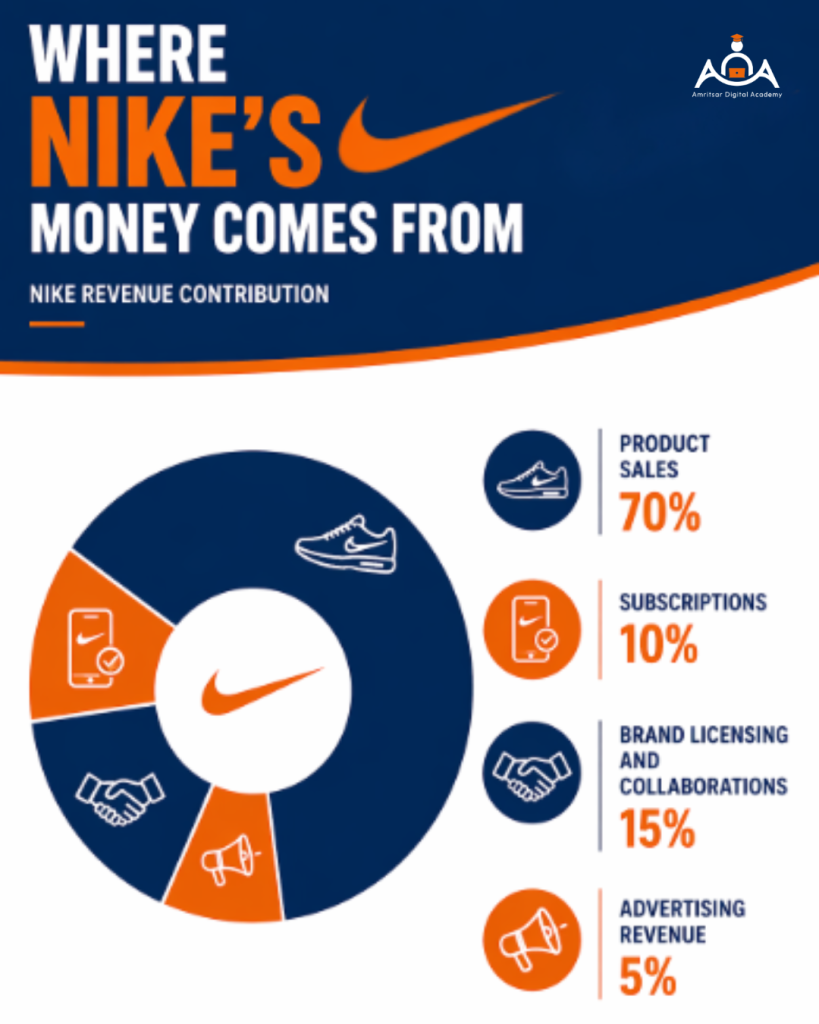
- Product Sales: Nike’s main source of income is generated by selling footwear, apparel and equipment.
- Subscriptions: Their subscriptions include services like Training Club which contributes 10% of revenue.
- Brand Licensing and Collaborations: They also generate additional income through deals with retailers and athletes.
- Advertising Revenue: Another source of income for Nike is from sponsorships and advertisements.
Who is Nike’s Target Audience?
To decode Nike marketing strategy, its important to understand Nike target audience. Through the Nike case study, you will know every targeting and segmentation decision Nike makes.
How Nike Segments Its Audience
| Demographic | 1. Nike primarily targets young audience, aged 18 to 40. 2. Mainly focused on those who are active, fitness conscious and looking for expensive high quality products. |
| Psychographics | Nike marketing strategy focuses on achievement oriented people who treat sport as core part of their personal identity |
| Behavioural Segmentation | Nike’s marketing strategy targets people who enjoy sports and work out. People who buy Nike products are loyal to the brand. Whenever Nike launches new product they buy it and following trend in fitness world. |
The main objective of Nike is not to sell shoes to customers only one time. It is to own place in how that customer sees themselves permanently.
Nike’s Marketing Mix (4Ps Analysis)
Marketing mix has four pillars that every brand needs to consider such as Product, Price, Promotion, and Place. Nike marketing mix plays important role in making Nike’s marketing strategy successful.
Product Strategy of Nike
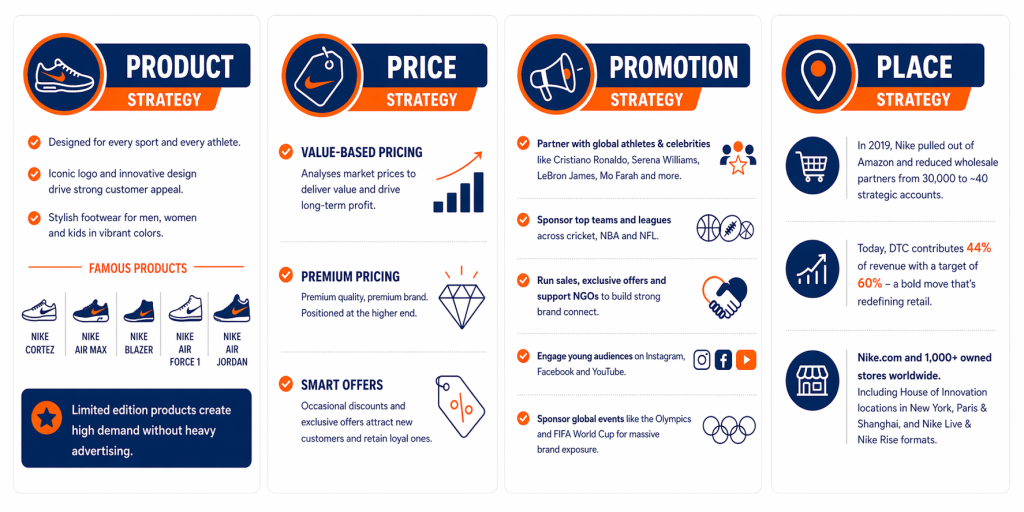
Nike designs products for each kind of sport which is why it’s in demand for athletes. Its famous logo is center of attraction which attracts customers. To attract youngsters, they also design different styles of footwear for non athletes in vibrant colors. Their style of sneakers for men, women and kids is in high demand. Most famous products of Nike are:
- The Nike Cortez
- Nike Air Max
- Nike Blazer
- Nike Air Force 1
- Nike Air Jordan
Nike limited edition products create high demand without spending on advertising.
Pricing Strategy of Nike
Nike sets its prices of products according to valued based and premium based pricing strategies. Value based pricing means, company analyses the current market price while setting price. This strategy helps brand to increase the profit over time.
Nike sets higher prices for their premium quality products. Nike is positioned as premium brand and mostly offers higher rate of products. They also offered time to time occasional discounts on its website and stores. With these offers it attracts new customers and also retains old ones.
Promotion Strategy of Nike
Nike promotion strategy includes sponsorships and advertising. They collaborate with high profile celebrities and athletes from different countries. The most famous celebs who promote Nike are Cristiano Ronaldo, Serena Williams, Mo Farah, Kunal Rajput, LeBron James, and Rafael Nadal.
- Nike also sponsors sports teams of cricket, NBA and NFL.
- Offer time to time sale discounts and exclusive offers to their customers.
- Also promote products through NGO by giving financial support to them.
- Nike uses social media platforms because their target audience is youngsters and most of the youngsters are on social media. So Nike promotes their product on Instagram, Facebook, and YouTube.
- Nike also sponsors major sports events like the Olympics and FIFA World Cup. This gives more brand exposure worldwide.
Place Strategy of Nike
In 2019, Nike pulled out of Amazon and cut its wholesale partners from 30,000 down to roughly 40 strategic retail accounts. That decision looked risky at the time. Today, with DTC at 44% of revenue and target of 60%, it looks like one of the best strategic moves in retail history.
Nike now operates Nike.com and over 1,000 owned stores globally. Store formats include House of Innovation locations in New York, Paris, and Shanghai, plus Nike Live and Nike Rise formats for different markets.
Nike Marketing Strategy: How Does Nike Market Its Product?
There are three main pillars of Nike marketing strategy.
- Emotional Storytelling
- Athlete Partnerships
- Community Building
Any Nike product launch, campaign, social media post you have seen all connect to at least one of these. This consistency builds recognition faster than novelty and keeps brand growing.
Pillar 1: Emotional Storytelling > Featuring Product
Nike rarely shows features of its shoes. Their main focus is to show struggle, perseverance, and victory so that it connects with audience and builds emotional connection. Lets understand this with real example:
Remember 2012 “Find Your Greatness” campaign, this is perfect example of this. Nike focuses on showing unknown everyday athletes pushing their limits in ordinary places, instead of featuring Olympic superstars. The main motive of this campaign is that greatness is not reserved for the famous.
Pillar 2: Athlete Partnerships as Brand Proof
Nike athletes are not just endorsers. They are living proof of brand promise. Big celebrities like Cristiano Ronaldo and Serena Williams help shape products and carry brand credibility in their sport. Nike’s celebrity endorsement strategy is built on proof, not decoration.
Pillar 3: Community as Marketing Channel
Nike builds community without spending money on advertising through its Nike Training Club and Nike Run Club. With these platforms, Nike creates engagement without direct selling. This approach reduces paid advertising and builds long term loyalty.
Nike Digital Marketing Strategies
With this Nike case study, let’s learn what digital marketing strategies Nike used.
Nike’s digital marketing strategies did not happen overnight. The company shifts its marketing strategies from traditional to digital channels. Today, 60% of Nike’s marketing spend is in digital advertising.
Social Media Marketing Strategy of Nike
Nike creates strong digital presence on social media platforms. They follow only one rule, that is build emotional connection with audience through storytelling first, then product. Nike’s social media presence across different social media platforms:
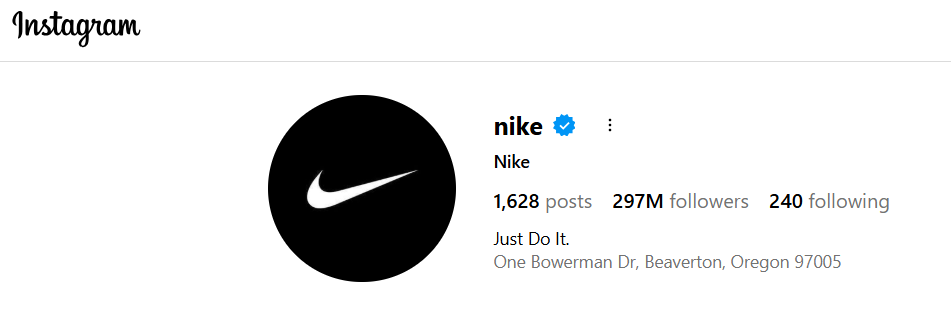
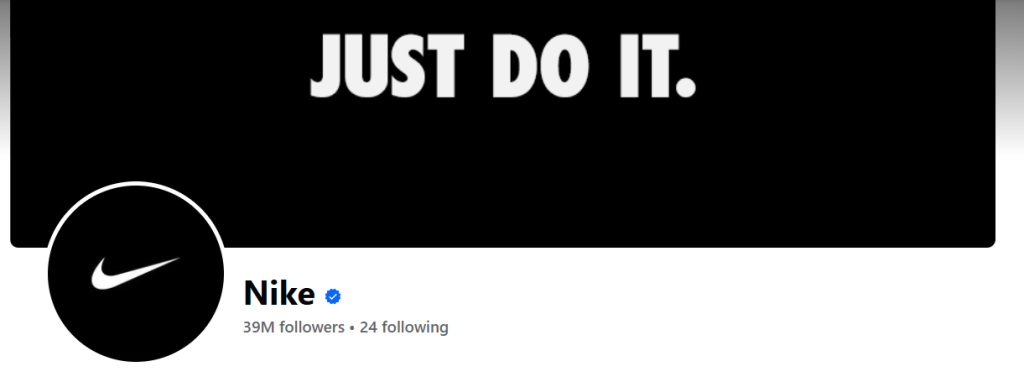
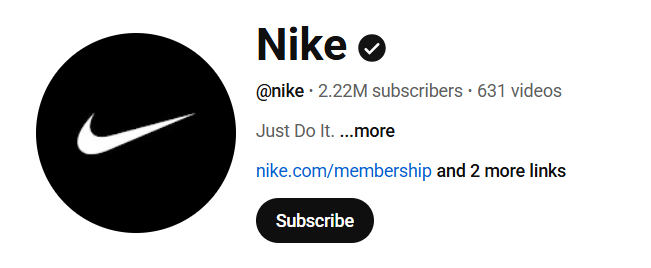
| 297M Followers | |
| 39M Followers | |
| YouTube | 2.22M Subscribers |
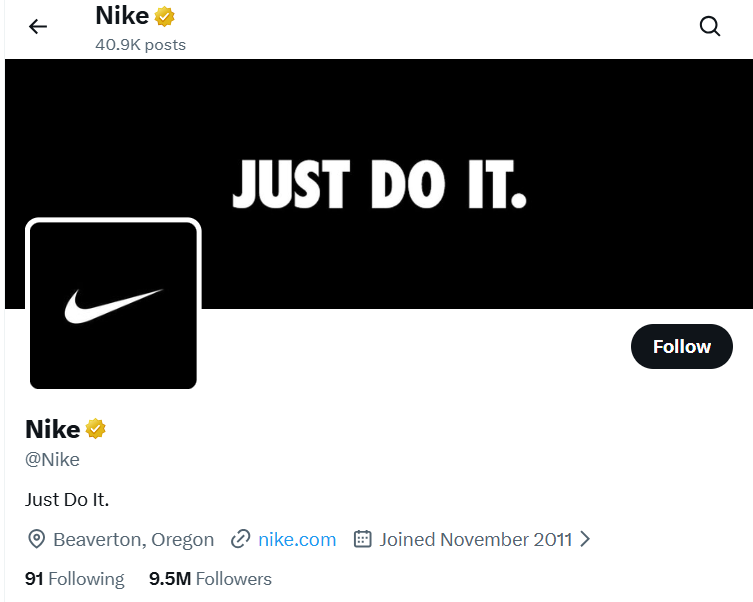
| 9.5M Followers |
These number counts clearly show how strong community Nike builds with social media marketing. They engage their followers through product releases, content, and BTS of athlete events.
Influencer Marketing Strategy of Nike
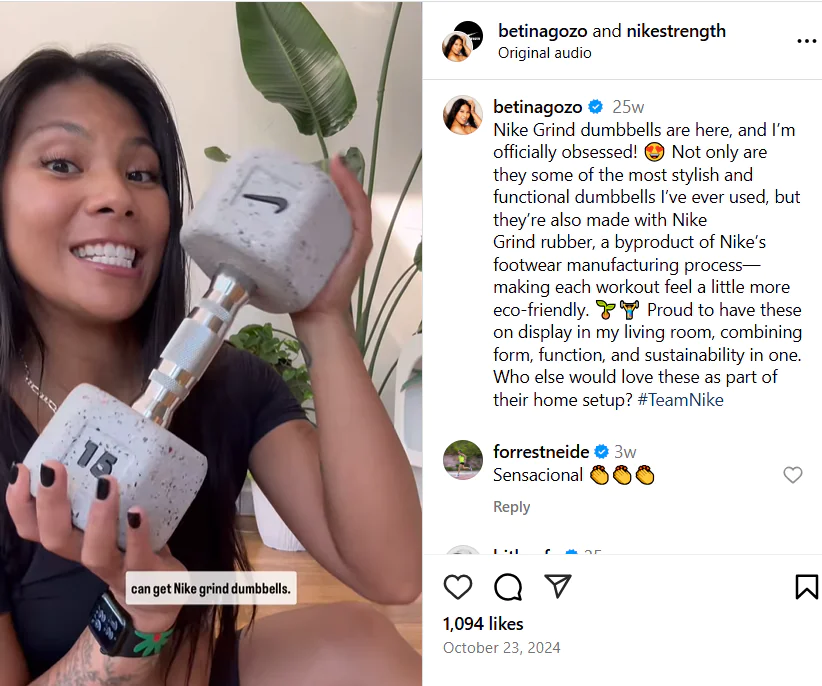
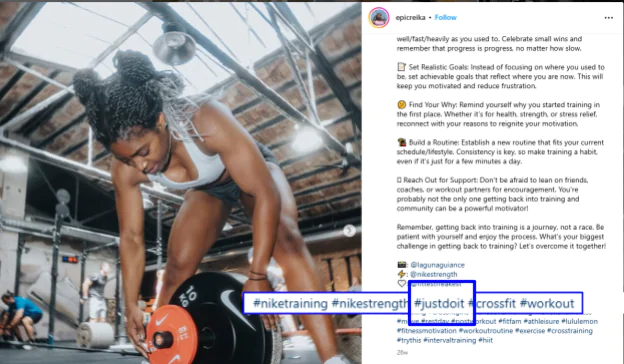

After 2020, Nike followed influencer marketing including big personalities and micro influencers. Influencers share their personal experience of Nike products with their audience and engage them to check out brand. Nike also sponsors community running clubs in major cities with real people, real runs, and real brand contact. With influencer marketing strategy, Nike collaborates with sports niche influencers to target their audience that automatically engages with Nike products.
SNKRS Drop Model by Nike
Nike’s SNKRS app runs limited edition shoe drops on controlled release schedule. Each drop creates urgency and triggers cultural conversation without any paid advertising behind it. The SNKRS waitlist system consistently generates more demand than available supply, which is the point.
Nike Advertising Strategy
Just Do It Campaign
The Just Do It tagline was created by Wieden+Kennedy in 1988. This phrase was inspired by convicted murderer Gary Gilmore’s last words before his execution, “Let’s do it.” The agency adapted it into three words that apply to any person, any sport, and any challenge. That universality is the reason Just Do It has survived 36 years without needing replacement. It is like blank canvas that fits every context Nike enters.
Powerful Storytelling Formula by Nike
Here are Nike’s advertisement campaigns that show how this formula works so well in practice:
Dream Crazy Campaign
This campaign was launched in 2018, featuring Colin Kaepernick with slogan ‘Believe in something.’ Even if it means sacrificing everything.’ This ad was intentionally made to create division. Some consumers burned their Nike shoes on social media. But Nike’s online sales went up 31% in the three days after the ad launched. The controversy confirmed the brand’s position instead of threatening it.
You Can’t Stop Us Campaign by Nike
Nike launches ‘You Can’t Stop Us’ campaign in 2020 with powerful message of resilience and unity during COVID-19 pandemic. Split screen video that connected athletes from different sports into single fluid image. It reached 58 million organic views on YouTube. Nike paid nothing in media for those views.
What Marketers and Brands Can Learn From This Nike Case Study
Here are some key lessons from Nike marketing strategy:
Consistent One Message: Nike has used same message for over 36 years. They give message of motivation, empowerment and perseverance across all platforms. This consistency builds recognition faster than novelty.
Emotional Connection: Nike builds emotional connections with their customers and this is plus point for Nike marketing strategy. People not only like Nike products, but they also feel connected with brand and stay loyal to it.
Innovation of New Products: Nike did not rely on same technology, marketing strategies and same old style products. They timely innovate new products for their customers and stay ahead in market.
Final Words
Nike did not win because it made better shoes. Adidas made good shoes. Puma made good shoes. Nike won because it understood one thing that its people do not buy products, they buy identity.
Nike brand strategy is not about running campaigns or spending money on advertising. It is about knowing exactly what identity your customer wants to inhabit and positioning your brand as the vehicle for that.
That is main objective of Nike company is not to sell you product, but to become part of how you see yourself.
Nike knows what it stands for and communicates it repeatedly across all channels. Through this Nike case study, we learn that long term success in marketing depends on consistency.
If you are curious to know about how digital marketing helps businesses to connect with customers online, check out our advanced digital marketing course to have practical skills and in depth knowledge.
Thank you for reading this Nike case study. We hope you gain knowledge about Nike marketing strategies from this case study. Let us know your thoughts in comment box.