
When we think of online shopping, one name that instantly clicks in our mind is Amazon. It started as an online bookshop and has now become global ecommerce empire influencing how businesses sell, how customers buy, and how marketers think. But do you know what makes Amazon so successful? This Amazon case study is not just about company, it is about relentless growth strategy that marketers, entrepreneurs, and digital leaders can learn from.
By the end of this Amazon case study, you will clearly understand how Amazon built system designed not just for growth but for unstoppable, scalable, and sustainable expansion.
In this Amazon case study, we will cover:
- Company Overview of Amazon
- How Does Amazon Make Money? (Amazon Business Model)
- 4Ps of Amazon’s Marketing Strategy
- Amazon Digital Marketing Strategy
- Amazon Sales Funnel Breakdown
- SWOT Analysis of Amazon
- Final Words

Company Overview of Amazon
Jeff Bezos started company in 1994 to build online bookstore and deliver books to customers. Within two months, Amazon established its presence in more than 45 countries. They quickly expanded into electronics, apparel, household goods, and eventually almost everything imaginable. Amazon acquired $54 million through IPO and listed in US stock exchange to fund its continued growth. Jeff Bezos achieve their goal by simply making money from selling books. He knows the potential of online business, as he also takes advantage of internet growth. He added music, movies and other content also.
- In 2002, Amazon launched AWS (Amazon Web Services) and now it is one of the notable cloud infrastructures worldwide.
- Then Amazon Prime was launched in 2005, and it provides two day free shipping to customers for Prime members.
- The company launched Amazon Prime Video to compete with other streaming platforms such as Netflix and Jio Hotstar.
- Amazon setup their headquarters US, Washington, Seattle.
- In 2018, Amazon become second ever company in world to reach market capitalisation of $2 trillion.
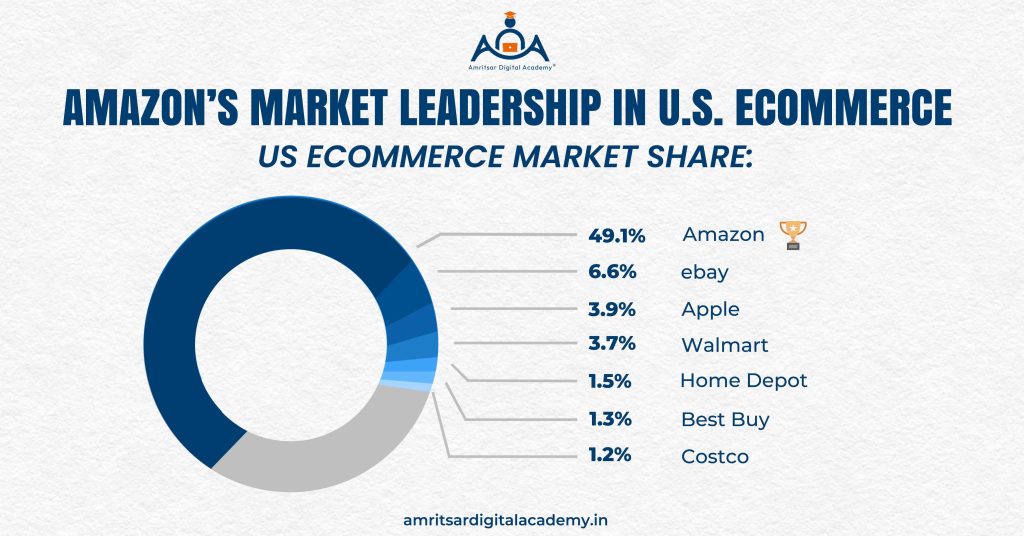
Vision of Amazon
“To be Earth’s most customer-centric company, Earth’s best employer, and Earth’s safest place to work.”
Amazon vision is clear and based on the three main pillars:
- Ensuring safety and efficiency across all operations.
- Customer focused approach to make shopping feel comfortable, personalised and effortless for customers.
- Creating workspace for employee well being that values growth, safety, and inclusivity.
How Does Amazon Make Money?
Amazon was not built in just one night. It took lot of effort, marketing strategies and different profit earning business models. This Amazon case study now shows Amazon business models that make it successful.
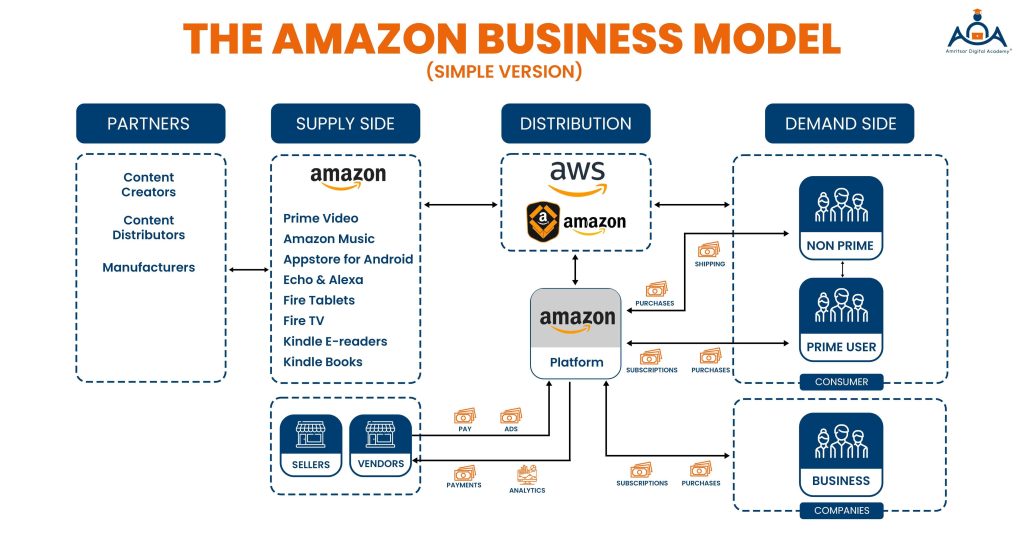
Amazon Business Model
Amazon’s business model is essentially a flywheel which means each segment feeds into the others, creating cycle of customer acquisition, retention, and monetization. They generate revenue from different segments and strengthen their long term scalability.
1. Amazon Marketplace
This is the biggest revenue stream for Amazon. Amazon directly sells its products itself. In 2025, Amazon total net sales reach $700 billion and revenue from third-party sellers accounts for over 60% of total units sold. This segment includes commission, shipping fees and fulfilment fees.
2. Amazon Web Services (AWS)
AWS is profitable segment of Amazon in terms of funding and innovation. In 2025, AWS’s business strategy shifted significantly to focus on generative AI infrastructure with billions of dollars invested in data centres and chips to host AI models for multinational corporations.
3. Amazon Prime (Subscriptions and Services)
Amazon pulls in steady cash from Prime memberships which pack in things like free shipping, streaming, and those members-only deals everyone brags about. In 2025, Amazon started running ads on Prime Video. Now, they’re making money not just from membership fees but also from a new ad-supported tier.
4. Amazon Business (B2B)
Amazon also deals with enterprises, schools, and government organizations that need bulk purchasing. They can order in bulk with customised invoicing, tax compliance, and procurement workflows.
5. Amazon Kindle and KDP
Amazon still owns the e-reading world, no question. But in June 2025, they shook things up for indie authors using KDP. Kindle ebooks keep the same 35% or 70% royalties, but print books, paperbacks and hardcovers took hit. Amazon says it needs this change to cover higher printing and shipping costs, all while keeping people hooked on Prime.
6. Amazon Advertising
Advertising used to be a side hustle for Amazon. Now it is one of their biggest money makers. In 2024, ad revenue hit $56 billion and by 2025 they pushed that to $65 billion. This part of the business is growing fast and raking in serious profits.
In this Amazon case study, one clear pattern emerges that every revenue stream supports the Amazon growth strategy of scale, efficiency, and ecosystem control.
4 Ps of Amazon’s Marketing Strategy

This Amazon case study explains the 4Ps of Amazon’s marketing strategy that show how the brand dominates globally. It helps clarify how every piece of the puzzle fits together.
- Product
- Price
- Promotion
- Place
Product
As we discussed earlier, Amazon sells books online in its initial stage. But now Amazon sells millions of different products in many categories such as clothes, jewellery, toys, home appliances, electronics, car accessories and many more. Amazon seller marketing strategy expanded its product line efficiently.
Amazon Basics, Kindle, Echo, Fire TV these are not just products. They are ecosystem lock ins that keep customers inside Amazon’s world.
Price
In any company, prices of products are set in many ways. But the best way to set the price of product would be to make the customers spend their money reasonably. Amazon sets its product price very smartly by applying competitive pricing. Amazon advertising strategy plays important role in setting competitive prices and attracting customers.
They look at what other sellers are charging and then adjust their own prices to stay lower. To make this faster, many sellers use repricing software that automatically changes prices in real time based on what competitors are doing and what customers want. This way, they stay competitive while still making profit. When setting prices, Amazon considers:
- How much money do they spend to sell the product
- How much of the product is available and how many people want it
- What buyers think is valuable
- What other sellers are charging
Amazon’s marketing plan relies heavily on this pricing strategy. They first study market trends and then offer products at discounted prices. This attracts many loyal customers. Once customers are shopping, Amazon recommends related products, encouraging them to explore more options and buy additional items.
Promotion
Everyone knows how important promotion is in this digital era. Amazon builds its presence by combining both traditional and digital marketing strategies.
- Products were advertised in press magazines, newspapers, billboards, telecast on televisions, and other similar operations to create promotions.
- Through proper communication, Amazon know who to target to sell particular product.
- Amazon uses the power of digital media to promote and advertise its products to wide customer base and ensure its message resonates with today’s tech savvy consumers.
Place
Amazon’s biggest strength is its online marketplace. With its global expansion plan especially through Amazon Global, customers can shop for products from almost anywhere in the world. The way Amazon handled marketing really changed the game. You didn’t have to be in a big city or even the same country to buy what you wanted. Amazon Global broke down those old barriers and let everyone shop like a local, no matter where they were.
What really sets Amazon apart is its ability to deliver quickly. Fast shipping, combined with huge variety of products has built trust and loyalty among customers. People are willing to spend their time and money with Amazon not just because of its reputation but because of the reliable service and wide product range it offers. This omnichannel marketing strategy differentiates Amazon from pure play ecommerce competitors.
Amazon Marketing Strategies
In this Amazon case study section, we talk about real growth engine. This is where things get really interesting for marketers. The Amazon marketing strategy is multi-layered, sophisticated, and evolving constantly. Amazon follows both traditional and digital marketing strategies very well.
Customer Centric Approach
The base of Amazon marketing strategy is its customer focused approach. They include all tactics and initiatives that enhance overall customer shopping experience. Amazon build strong relationships with its customers by fulfilling their needs at forefront. With these smart marketing tactics, Amazon gets returning customers.
Amazon customer centric approach is based on personalised recommendation system. They analyse customer behaviour and purchase history to offer targeted recommendations according to customer preferences. For example, when customers purchase any product from Amazon, Amazon’s algorithm analyzes customers’ preferences and shows similar products that might interest customers. With this approach, its not only enhances customer shopping experience but it also promote cross selling products opportunities.
Omni Channel Marketing
Amazon’s omnichannel marketing strategy makes shopping flexible, connected, and personalized for customers. Customers can shop anywhere, anytime with smooth and consistent experience. Amazon marketing strategy is all about enhancing shopping experience of customers through different marketing channels.
- Customers can buy products through Amazon’s website, mobile app, and also from physical stores. This flexibility means people are not dependent on one option they can shop from any Amazon marketing channel.
- Amazon connects all its channels so everything feels unified. For example, one account works across devices. You can start shopping on your laptop then continue on your phone without losing your saved details.
- Amazon knows mobile shopping is huge. That’s why its app and website are designed to be fast, easy to use, and work well on smartphones and tablets.
- Amazon collects data from all channels to know customer tastes. This helps them send customised recommendations, emails, and ads. For example, if you browse product category online, you might later see related promotions in your mailbox.
Market Expansion
Amazon is always searching for new ways to grow so they enter new regions and adds new product categories. This helps them to reach more customers and keep growing. Amazon began as online bookshop before swiftly branching out into apparel, electronics, home goods, and more. It draws in a diverse clientele by providing large range of products. Introducing its own products such as Fire tablets and Kindle e-readers, not only increases sales but also maintains consumer engagement with Amazon’s ecosystem.
Amazon Digital Marketing Strategies
Now in this Amazon case study, lets decode what digital marketing strategies are used by Amazon.
SEO Strategy of Amazon
Amazon plays two SEO games at the same time:
- Inside Amazon (Marketplace SEO): This is about making product listings show up higher in Amazon’s own search results.
- Outside Amazon (Google SEO): Amazon website gets 239.1M organic traffic with strong domain authority of 99.
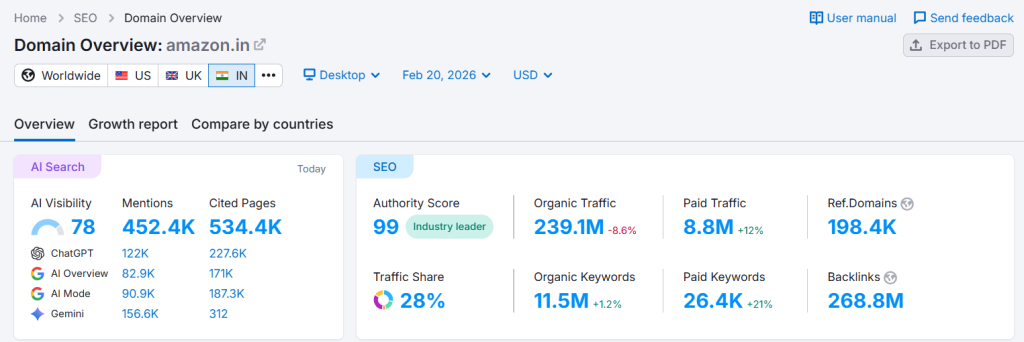
How Amazon’s search works:
Amazon’s algorithm focuses on relevance and sales. The more product sells means higher it ranks. Success on Amazon comes down to strong product listings. That means:
- Clear and keyword rich titles
- Bullet points with important details
- Backend search terms for extra keywords
- High-quality product images
Enhanced A+ content:
Brands that use A+ content usually see better conversion rates and fewer returns because customers get more detailed and engaging information before buying.
Amazon PPC Strategy
Amazon’s PPC ads are one of the strongest marketing tools today. These ads are called Sponsored Products which show up in search results and also on competitor product pages. They play very important role in getting first time purchases on Amazon.
Amazon PPC strategy focuses on:
- Keyword research to find right search terms customers use.
- Smart bidding settings to get the best return.
- Blocking irrelevant searches so money is not wasted.
- Constantly trying new ad copy and product images to see what works best.
Amazon Social Media Marketing Strategy
The Amazon social media marketing strategy is less about direct sales, its about building brand and cultural relevance. They focus on engagement, storytelling, and customer trust rather than just promotions. Amazon has strong presence on social media platforms to connect with its audience and maintain customer loyalty. Amazon has strong footprints in:
Facebook: 10M Followers
Instagram: 5.4M Followers
YouTube: 1.58M Subscribers
Pinterest: 2.2M Followers
Twitter: 5.9M Followers




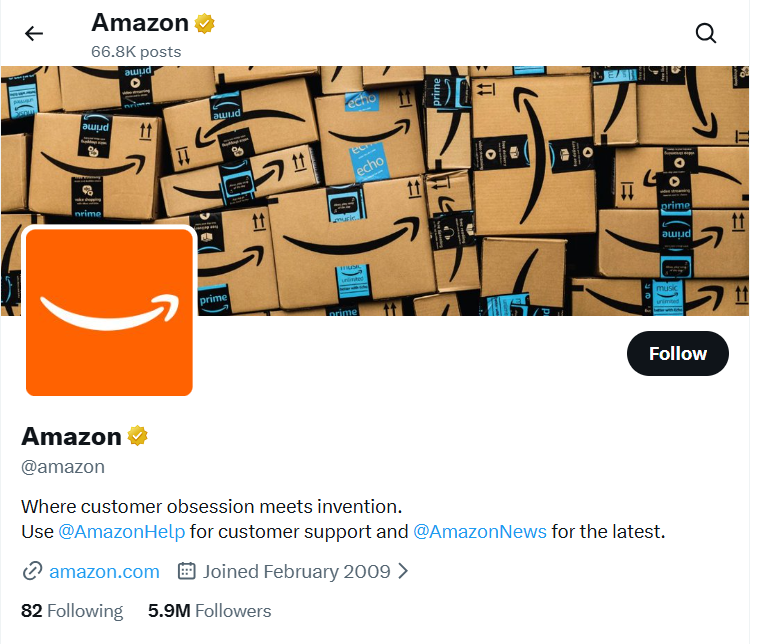
Their smart social media marketing strategy amplifies Prime Day deals, showcases new products, and engages communities around entertainment and lifestyle content.
Amazon Influencer Marketing
Amazon influencer marketing has become important way to promote products. With the Amazon Influencer Program, creators who have followers on social media can set up their own Amazon shopfronts. They share and recommend products and when people buy through their links, they earn commissions. This makes product discovery feel more natural and genuine compared to traditional ads.
Also Read: Tesla Case Study 2026: Tesla’s Strategies That Made It No.1
Amazon Sales Funnel Breakdown
This Amazon case study shows that Amazon sales funnel is aligned with its Amazon growth strategy to attract, convert, retain, and upsell.
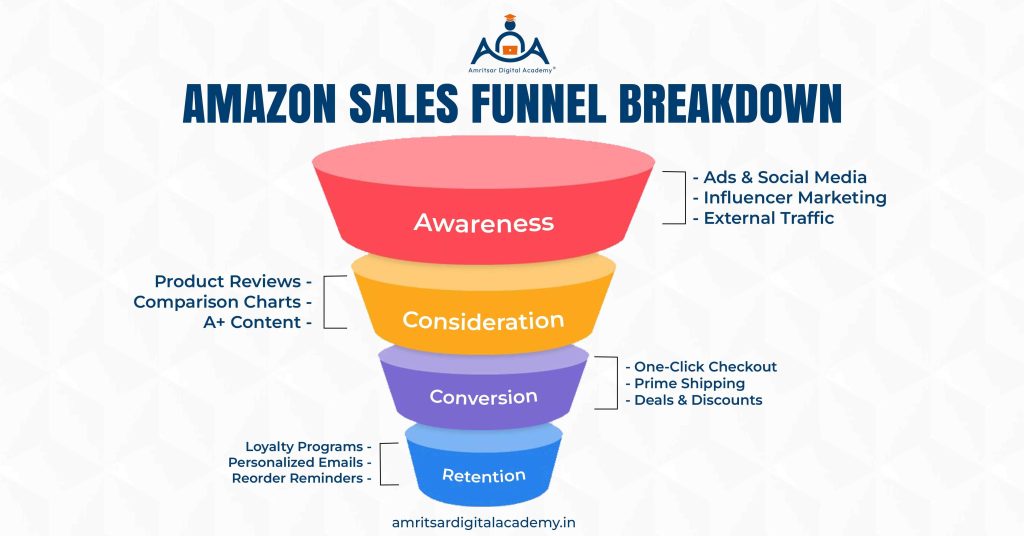
Awareness: Amazon generates awareness among customers through spoonsered ad and influencer marketing. Many people directly search for products on Amazon because Amazon is well known ecommerce platform.
Consideration: Once customer comes, Amazon algorithm shows comparison charts, A+ content, and features to keep customers engaged with Amazon ecosystem.
Conversion: Amazon enhance overall customer shopping experience with one click purchase, free Prime shipping, and simple return options.
Retention: Prime membership keeps customers coming back. Once people pay annual subscription, they are less likely to shop elsewhere. Features like Subscribe, Save, personalised deals, and Prime Video create cycle that keeps customers loyal. Retained customers are far more valuable than new ones which is why this stage is key to Amazon’s growth.
SWOT Analysis of Amazon
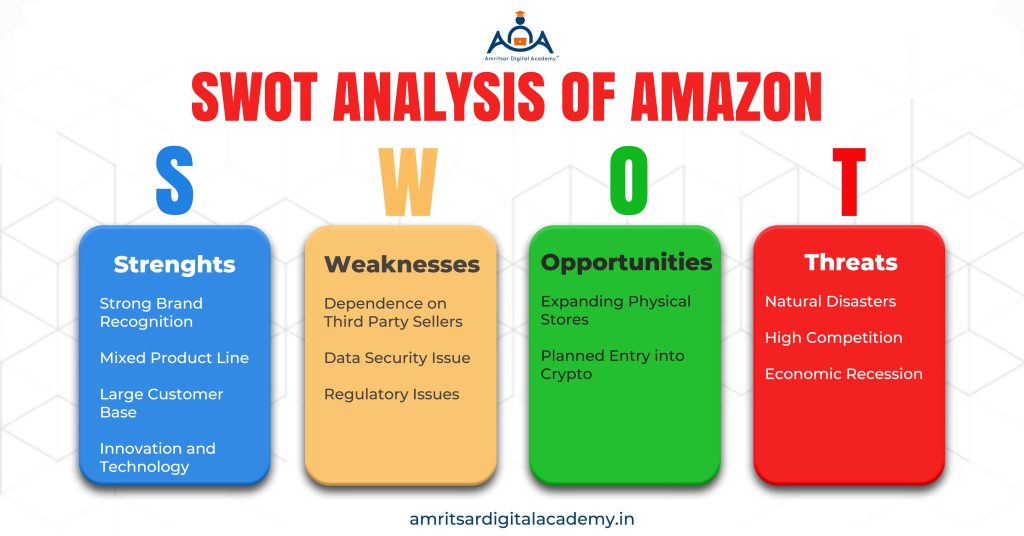
S = STRENGTHS
W = WEAKNESSES
O = OPPORTUNITIES
T = THREATS
Strengths
- Strong Brand Recognition: Amazon has strong brand reputation worldwide. Its strong global presence attracts customers trust, which plays big role in Amazon success.
- Mixed Product Line: Its wide range of products means customers can find almost anything they need. With diverse product line, it helps to sustain in competitive market where customer preferences change rapidly.
- Large Customer Base: Amazon has large distribution network which allows the company to efficiently deliver products to customers all over the world. This helps Amazon to attract more customers.
- Innovation and Technology: On top of that, Amazon invests heavily in technology and innovation which keeps it ahead of competitors. The company has implemented advanced robotics and automation in its fulfilment centres to improve efficiency and accuracy.
Weaknesses
- Dependence on Thirt Party Sellers: It relies lot on third party sellers. This can lead to issues with product quality, availability, and delivery which can impact the customer experience.
- Data Security Issue: Data security is another concern, as protecting customer information is always challenge. The risk of cyberattacks is constantly increasing and Amazon must remain vigilant in its efforts to protect customer data
- Regulatory Issues: The company also faces regulatory problems with governments keeping close eye on its size and influence.
Opportunities
- Expanding Physical Stores: Amazon is expanding into physical stores which can help it reach more customers offline. Company needs to establish more Amazon Go stores to offer convenient and innovative shopping experience.
- Planned Entry into Crypto: Amazon is looking into cryptocurrency now, which could bring in some brand new ways to make money.
Threats
- Natural Disasters: Natural disasterssuch as earthquakes, floods, cyclones can disrupt supply chains. These disasters can disrupt the company’s ability to fulfill orders, as well as damage its warehouses, transportation networks, and other infrastructure.
- High Competition: Market competition is very high in ecommerce market. To stay on top of the market is difficult to compete with rivals like Walmart and Alibaba fighting for market share.
- Economic Recession: When the economy takes a downturn, people start watching their wallets. Shoppers pull back on spending, and Amazon’s sales can take a real hit during those times.
How to Become Digital Marketing Expert?
Digital marketing is way to reach more people digitally. Today, almost every business is going digital because it helps them reach huge audience. This has created high demand for digital marketing professionals. That’s why right now is one of the best times to build career in this industry.
One of the smartest ways to boost your career is by getting professional certification. It not only adds value to your resume but also shows employers that you have the right skills. Our advanced digital marketing training program can help you achieve this. With globally recognized certification, you will have better chances of landing your dream job.
Final Words
This Amazon case study clearly shows that Amazon’s success is not luck. It is the result of deeply integrated Amazon marketing strategy, a diversified Amazon business model, and relentless Amazon growth strategy focused on customer obsession.
If there is one takeaway from this Amazon case study, it’s that growth happens when strategy, technology, marketing, and customer experience work together perfectly.
For marketers, entrepreneurs, and students, studying this Amazon case study is like decoding blueprint for modern digital power.