Whenever we think of stylish and affordable furniture, there is only one brand that comes to our mind i.e. IKEA. But IKEA is not only furniture retailer, it’s also a marketing powerhouse that has cracked the code on connecting with customers worldwide. IKEA is swadeshi brand that has grown from small mail-order shop into world famous name in home furniture. This IKEA case study is all about what makes IKEA’s marketing strategy so effective. IKEA has over 400 stores in more than 50 countries by serving smart design, affordability, and immersive customer experience. This IKEA case study covers—
Table of Contents
- Overview of IKEA as Global Brand
- IKEA Business Model
- IKEA Target Audience and Market Segmentation
- IKEA Marketing Channels
- IKEA Marketing Strategy
- IKEA Digital Marketing Strategy
- IKEA Social Media Marketing Strategy
- Content Marketing Strategy Behind IKEA Success
- SWOT Analysis of IKEA
- Marketing Lessons Brands Can Learn from IKEA
- Final Verdict
Overview of IKEA as Global Brand
History and Growth of IKEA
IKEA was founded by 17 year old Ingvar Kamprad in Sweden in 1943. IKEA started with simple idea to offer stylish furniture at affordable prices so that everyone can easily purchase. It started as small company that sold pens and wallets with idea of providing consumers with products at most affordable prices. The turning point came for IKEA when it started the furniture venture.
Growth Milestones of IKEA
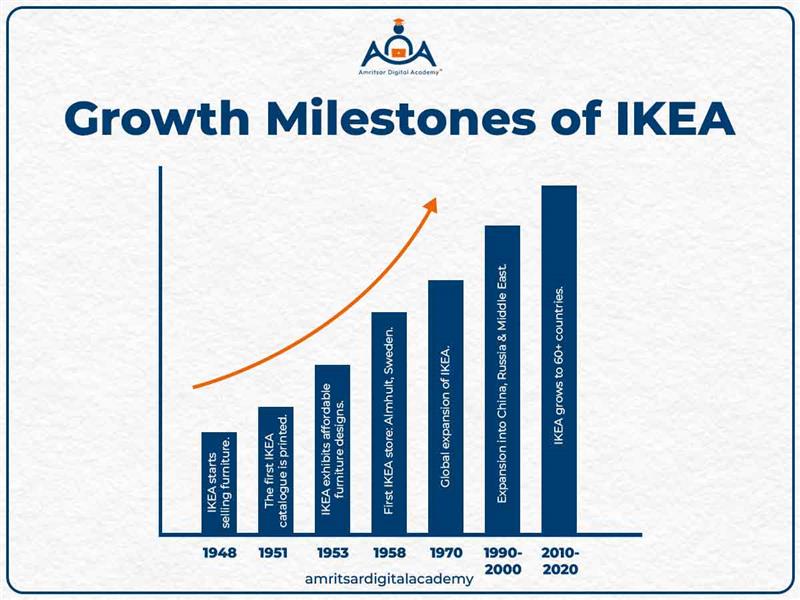
- 1948 – IKEA starts selling furniture and shifts focus to home products.
- 1951 – The first IKEA catalogue is printed and helping spread the brand.
- 1953 – IKEA shows its furniture in an exhibition and highlighting affordable designs.
- 1958 – IKEA opens its first store in Almhult, Sweden.
- 1970 – IKEA expands its stores in Europe, Asia, Australia, and North America.
- 1990 –2000 – IKEA enters new markets like China, Russia, and the Middle East.
- 2010 –2020 – IKEA focuses on sustainability, online shopping, and grows to over 60 countries worldwide.
Vision of IKEA
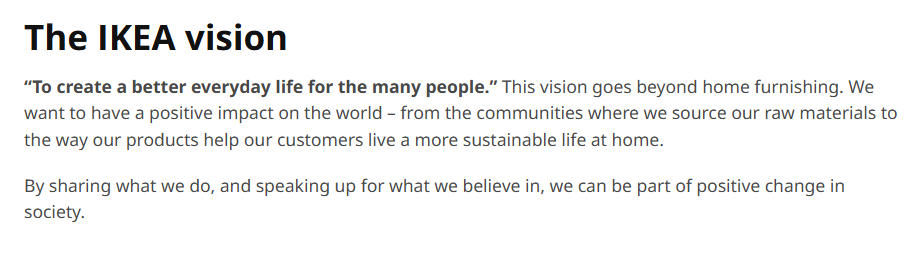
IKEA’s vision is: To create better everyday life for the many people. That means accessible design, sustainable practices, and affordability, all wrapped in customer first philosophy.
IKEA Business Model
The business model of IKEA is built on cost leadership strategy that delivers value without compromising quality.
1. Cost Leadership Strategy
IKEA focused on cost leadership strategy which means their main goal is to provide stylish products at affordable prices like quality of premium brands.
2. Flat Pack Furniture Idea
This great concept of flat pack furniture makes IKEA famous. By designing furniture that consumers assemble themselves, it saves warehousing and shipping.
3. Omnichannel Retail Approach
Where IKEA create seamless experience in store for their customers, they also invested in mobile apps, online retail and hybrid stores. IKEA creates consistent experience for its customers whether they purchase from offline or online retail.
IKEA Target Audience and Market Segmentation
To really get why IKEA’s marketing strategy works, you need to look at IKEA target audience. They have cracked the trick of reaching wide range of people while still making it feel personal and relatable. In this IKEA case study lets discuss IKEA target audience and its market segmentation.
Who IKEA Sells To (Age, Lifestyle, Income)
IKEA target audience includes young adults, families, middle income group, urban dwellers and eco conscious shoppers.
| Target Audience | Description |
| Young Adults (18-35 yrs) | It includes students, first time renters, and young professionals looking for affordable and trendy furniture. |
| Families (25-45 yrs) | Parents who need practical, durable, and child friendly home solutions. |
| Middle Income Group | IKEA appeals strongly to cost conscious buyers who want value without sacrificing design. |
| Urban Dwellers | IKEA’s modular and space-saving designs fit perfectly for those people who live in cities with smaller spaces. |
| Eco-Conscious Shoppers | Customers who care about sustainability and appreciate IKEA’s focus on renewable materials and recycling. |
Market Segmentation of IKEA
IKEA target market segmentation into four dimensions: demographic, geographic, behavioral, and psychographic. They serves every market segment according to its preferences and needs.
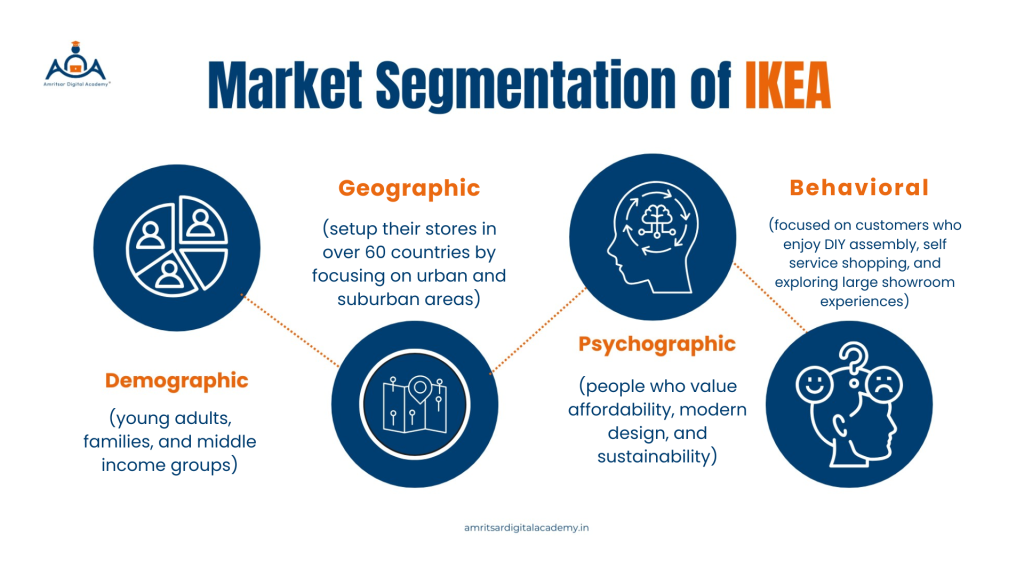
IKEA offers range of tailored furniture according to priorities of each segment. IKEA’s different segmentation strategies each help the brand succeed globally. Let’s look at how IKEA uses these approaches to connect more closely with its customers.
| Segmentation Type | IKEA Approach |
| Demographic | They target young adults, families, and middle income groups globally. |
| Geographic | IKEA setup their stores in over 60 countries by focusing on urban and suburban areas. |
| Psychographic | They appeals to people who value affordability, modern design, and sustainability. |
| Behavioral | They focused on customers who enjoy DIY assembly, self service shopping, and exploring large showroom experiences. |
How IKEA Adapts Marketing for Local Markets
✅IKEA keeps its global brand consistent but adapts marketing messages for local cultures.
✅In Japan they highlight smaller furniture for compact homes.
✅In India they focus on vegetarian food in their restaurants and products designed for tropical living.
This approach proves that IKEA knows good marketing is not one size fits all, it works best when it’s sensitive to culture and according to each market.
IKEA Marketing Channels
IKEA strategically use multiple marketing channels that work together and make their marketing strong.
Offline Retail Stores
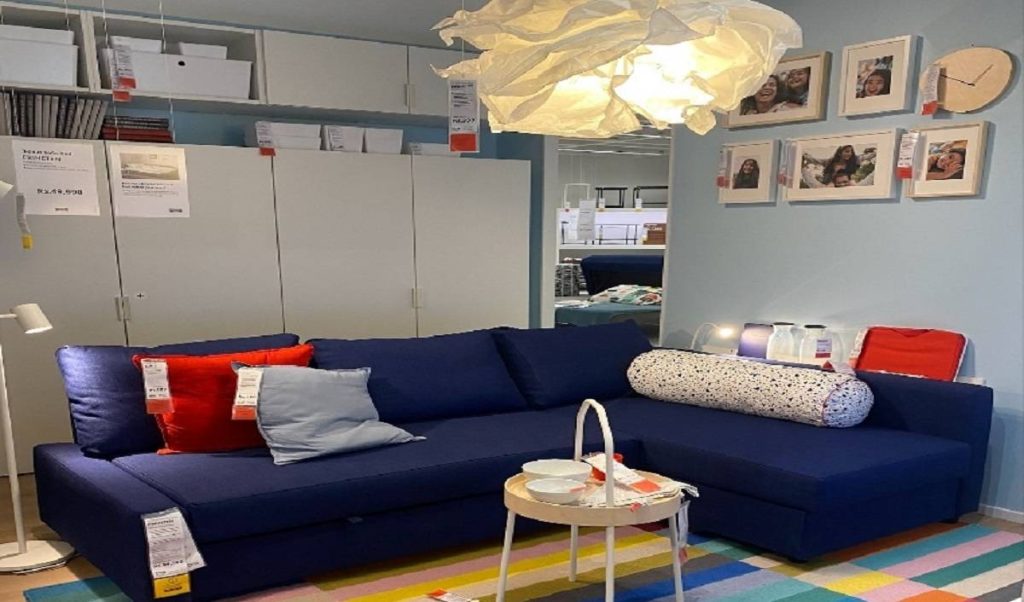
IKEA create immersive brand experience for its customers that turns shopping into enjoyable dayout. Their offline stores are marketing masterpiece. Showrooms allow customers to experience products in real life setups, encouraging exploration and longer visits.
Omnichannel Retail Marketing
IKEA follows strong omnichannel retail strategy. This approach ensures that customers start their shopping journey online and finish in store. It means you can browse products on mobile app or website, check stock, their valse and then visit store to purchase. By connecting online and in store experiences smoothly, IKEA makes shopping easier and meets customers at every step of their journey. This kind of integration is key in today’s retail marketing.
Role of Catalogs, Apps, and Website
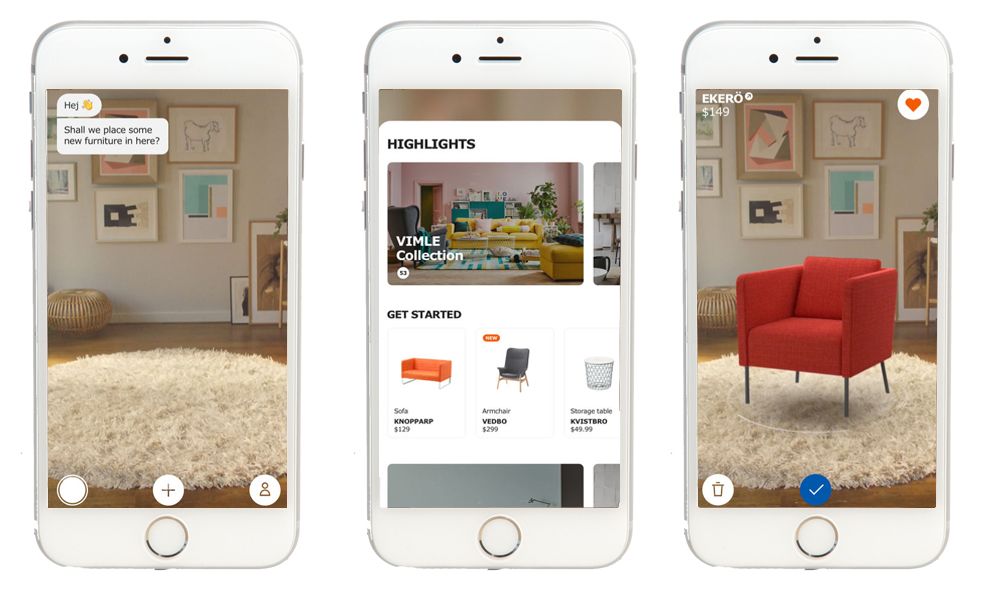
The famous IKEA catalog was one of the most powerful marketing assets in retail history. Tools like the IKEA Place app which lets you use augmented reality to see furniture in your own room and turn shopping from just browsing into interactive experience. These tools work both as handy shopping helpers and powerful marketing platforms.
IKEA Marketing Strategy
This IKEA case study proves that IKEA success story is totally based on its marketing strategies. IKEA marketing strategy focused on long term building relations with their customers rather than giving on discounts.
Customer First Marketing Approach
Everything IKEA does stems from understanding pain points of customers. Long store visits? They add playrooms and restaurants. Confusing layouts? They create inspirational room setups. Difficult online shopping? They invest in augmented reality apps. This customer first marketing approach drives every marketing decision, from product design to communication channels.
Value Driven Communication Over Discounts
IKEA never focuses on constantly advertising sales and discounts. They rarely run promotional campaigns because their everyday pricing already represents value. This builds trust and customers know they are getting good deal every time they shop.
IKEA Digital Marketing Strategy
Lets understand how IKEA digital marketing strategy make them so successful.
Website and App Experience as Marketing Tool
IKEA website and app are act as marketing tool. IKEA makes sure its website and app are fast, easy to use, and designed with smooth buttons and gestures so people enjoy shopping online. They put effort into good design, helpful chatbots, and regular updates about offers and discounts. One of their smartest marketing moves is 3D modeling app which lets customers imagine their dream home. This not only makes shopping fun but also helps IKEA promote items that do not sell as much by inspiring people to redesign their rooms.
IKEA Social Media Marketing Strategy
IKEA has strong online presence on Instagram, Facebook, YouTube, and Twitter. This multi platform presence ensures IKEA reaches audiences where they naturally spend time.

➺Instagram Followers: 1.7M

➺YouTube Subscribers: 285K
➺ Facebook Followers: 34M
Each platform serves different purpose — inspiration, tutorials, entertainment, and community engagement.
Influencer Marketing Strategy of IKEA
IKEA follows digital marketing trends and they analyse the value of influencer marketing. They did not only rely on celebrities, they approach micro influencers and everyday users. These social media influencers showcase real life usage and making content feel authentic. UGC content plays very major role in IKEA’s digital marketing campaigns, increasing trust and relatability.
IKEA Search Engine Optimization
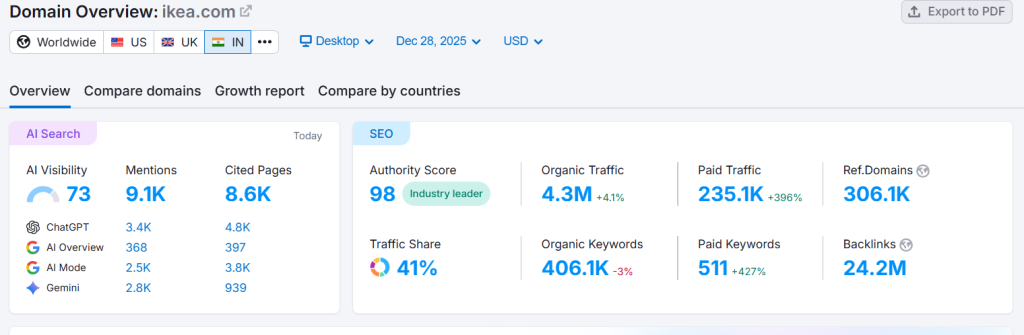
IKEA marketing strategy aim to increase website visibility. It uses relevant product keywords and Google Ads to increase its organic ranking.
Also Read: Netflix Case Study: Powerful Marketing Lessons For 2025 Now!
Content Marketing Strategy of IKEA
IKEA content marketing strategy focuses on real customer stories. It shows its products in real life settings and gives people practical ideas they can actually use. This style of marketing feels less like advertising and more like friendly advice from someone who knows what works. IKEA creates helpful content such as DIY guides, storage tips, and small space solutions.
SWOT Analysis of IKEA
According to this IKEA case study, SWOT analysis of IKEA states its
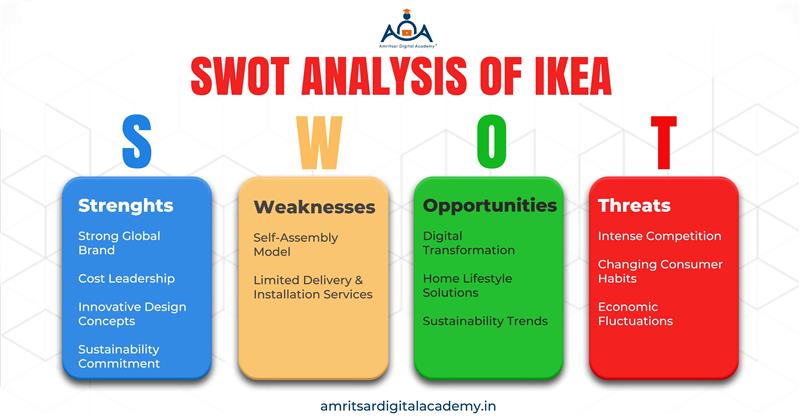
S= STRENGTHS
W= WEAKNESSES
O= OPPORTUNITITES
T= THREATS
Strengths
- Strong Global Brand: IKEA is one of the most recognizable furniture brand globally. When people think of affordable and stylish furniture, IKEA always comes to our mind.
- Cost Leadership: IKEA follows strong cost leadership strategy by controlling costs at every stage. It offer quality products at lower prices than many competitors.
- Innovative Design Concepts: IKEA focuses on smart and space saving designs that solve everyday problems. This is the main reason, people wants IKEA for their home furniture.
- Sustainability Commitment: IKEA has made sustainability core part of its business and marketing strategy. IKEA positions itself as environmentally responsible brand which resonates strongly with modern consumers.
Weaknesses
- Self-Assembly Model: Not everyone is comfortable assembling furniture which may reduce satisfaction for buyers who prefer ready to use products.
- Limited Delivery & Installation Services: IKEA’s delivery and installation options are limited. This can discourage customers who expect end to end service especially when compared to competitors offering easy setup services.
Opportunities
- Digital Transformation: IKEA has strong opportunity to enhance its digital presence through better apps, virtual room planning, and AI based personalization.
- Home Lifestyle Solutions: IKEA can grow by offering complete home lifestyle solutions such as smart homes, storage systems, and home organization services. This allows IKEA to increase customer lifetime value.
- Sustainability Trends: IKEA can expand their product lines in eco friendly products because now consumer mindset has shifted to environmentally conscious products.
Threats
- Intense Competition: IKEA faces strong competition from online furniture brands and local retailers. They offer faster delivery and customization. This increases pressure on pricing and customer retention.
- Changing Consumer Habits: Modern consumers prefer convenience and fast delivery. IKEA needs to adapt quickly to these changing habits to compete with competitors.
- Economic Fluctuations: Due to economic fluctuations, it impacts consumers spending which affects IKEA’s pricing strategy and profitability.
Marketing Lessons Brands Can Learn from IKEA
From this IKEA case study, these are some marketing lessons that every brand can learn from IKEA:
| ✅IKEA shows that focusing on everyday fair prices works better than constant discounts. |
| ✅This IKEA case study proves that investing in touchpoints where customers actively interact with your brand. |
| ✅IKEA marketing strategy prioritizes long term growth rather than building short term connections with customers. |
| ✅IKEA invests in sustainability, educational content, and better customer experiences. These efforts may not bring quick profits but they build stronger brand in the long run. |
| ✅Build strong emotional connection with customers through everyday storytelling content. |
Final Verdict
This IKEA case study shows that IKEA’s success story is not accidental. Its marketing strategy and proper understanding of customers pain points make it successful. IKEA focuses on giving real value and building emotional connections with relatable stories. IKEA knows people want affordable home furniture that still looks stylish and its marketing strategy proves that. The IKEA proves that best marketing is about solving customer problems, not just promoting products.
Want to learn how brands like IKEA build powerful marketing strategies in the real world?
At Amritsar Digital Academy, we teach practical digital marketing through real brand case studies, hands on projects, and industry ready training. Start building skills that companies actually look for.